

- December 15, 2025
- Posted by: Vesna Latic
- Categories: qAID, RAI News
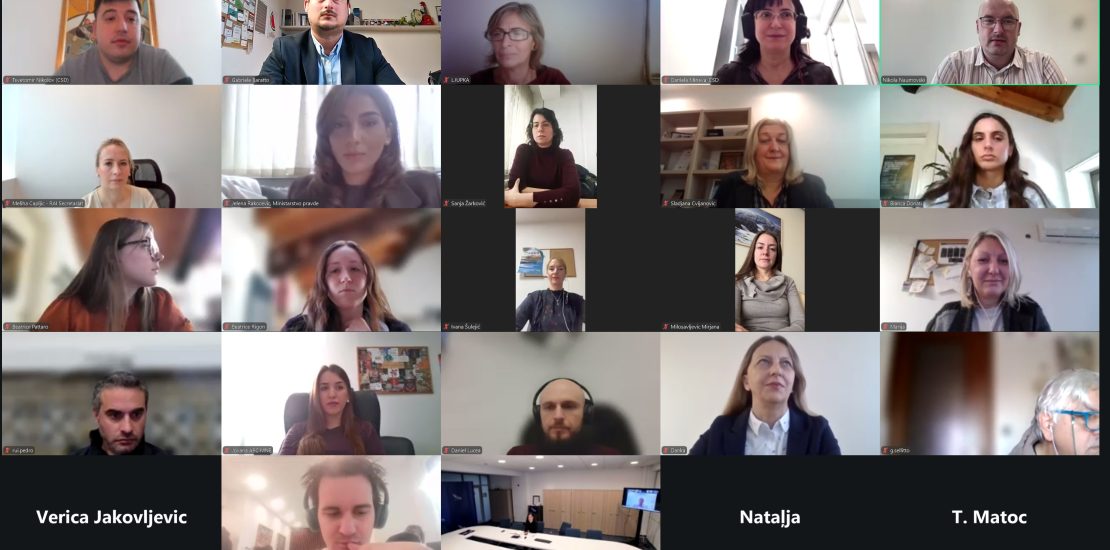
Two online networking and dissemination events were organized today in the framework of the qAID project, engaging over 30 participants from EU Member States and Candidate States. The events served as an important platform to strengthen communication, dissemination, and visibility of key project results, with a particular focus on Work Packages 2, 3 and 4.
Purpose of the Events
The main objective of this activity is to ensure that newly generated project knowledge, good practices, and innovative tools are effectively disseminated to relevant national stakeholders. These events help promote the use of project outputs and ensure their impact extends beyond the project’s lifetime.
Highlights from Work Packages Presented
Work Package 2: Inventory and analysis of the current state of AID systems in EU Member States and Candidate States and identification of best practices
WP2 mapped and analyzed AID systems in EU Member states and Candidate states, documenting their characteristics, achievements, shortcomings, advantages and disadvantages, and identifying best practices. Key tasks included:
- Survey design
- Online administration
- Development of the comprehensive report on AID systems
Work Package 3: focused on developing a standardized EU risk analysis framework that supports filtering of declarations and prioritization of verification. Additionally, WP3 delivered a roadmap for implementing automated and digital risk analysis of asset declarations and interests.
Key tasks included drafting, refining, interviews and finalizing the framework and producing a report on risk analysis and digitalization.
Work Package 4: Development and validation of a methodological toolkit for assessing the impact of asset and interest declaration systems.
WP4 developed and validated a user-friendly, integrated toolkit for assessing the impact of AID systems. The toolkit was tested in Italy, Bulgaria, Romania, Croatia, and North Macedonia.
Deliverables included:
- Draft toolkit
- Testing and finalization
- Final report with methodological toolkit
By facilitating exchange among experts, anti-corruption practitioners, and institutions, today’s events contributed to enhancing:
- Knowledge on effective AID systems
- Understanding of risk analysis and digital verification
- Capacity of anti-corruption bodies across the EU and candidate countries
The qAID project continues to support stronger, more transparent, and more impactful asset and interest disclosure systems across Europe.
The project (co-financed by the European Commission under the ISF programme) is coordinated by the Centre for Security and Crime Sciences of the University of Trento and the University of Verona and carried out in collaboration with the National Anti-Corruption Authority (ANAC, Italy), the Regional Anti-Corruption Initiative (RAI) Secretariat, the Agency Națională de Integritate (Romania’s anti-corruption agency), and the Center for the Study of Democracy (research centre based in Bulgaria).